

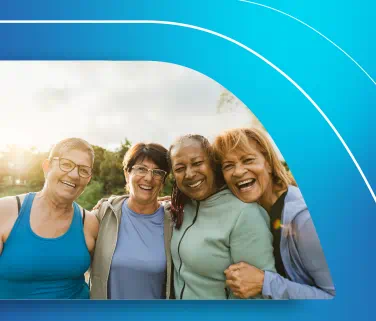
Christine, 55, has always defined herself by movement. From hiking with her kids to spending long days outdoors, being active was part of her identity. So when two unexpected foot fractures from standing-height falls led to a diagnosis of postmenopausal osteoporosis, she was stunned.
Although foot fractures are not medically indicative of postmenopausal osteoporosis, her doctor had ordered a bone density scan called a DXA to be sure, revealing the disease. “I remember opening my test results and thinking, how can this be happening? I take care of myself,” said Christine. “But I also knew I wasn't going to let it stop me.”
With family history of the disease, Christine understood the stakes were high.1 What she did not expect was how much she would need to advocate for herself. After pushing for earlier appointments, additional testing, and a specialist referral, she finally found a treatment plan that fit her lifestyle and goals.
Today, she's focused on using a monthly treatment to strengthen her bones and help reduce the risk of osteoporotic fractures, in addition to strength training and a healthy diet. Most importantly, she's not giving up the activities she loves.
Christine's message to other women is simple: speak up, stay informed, and don't wait to take control of your bone strength.
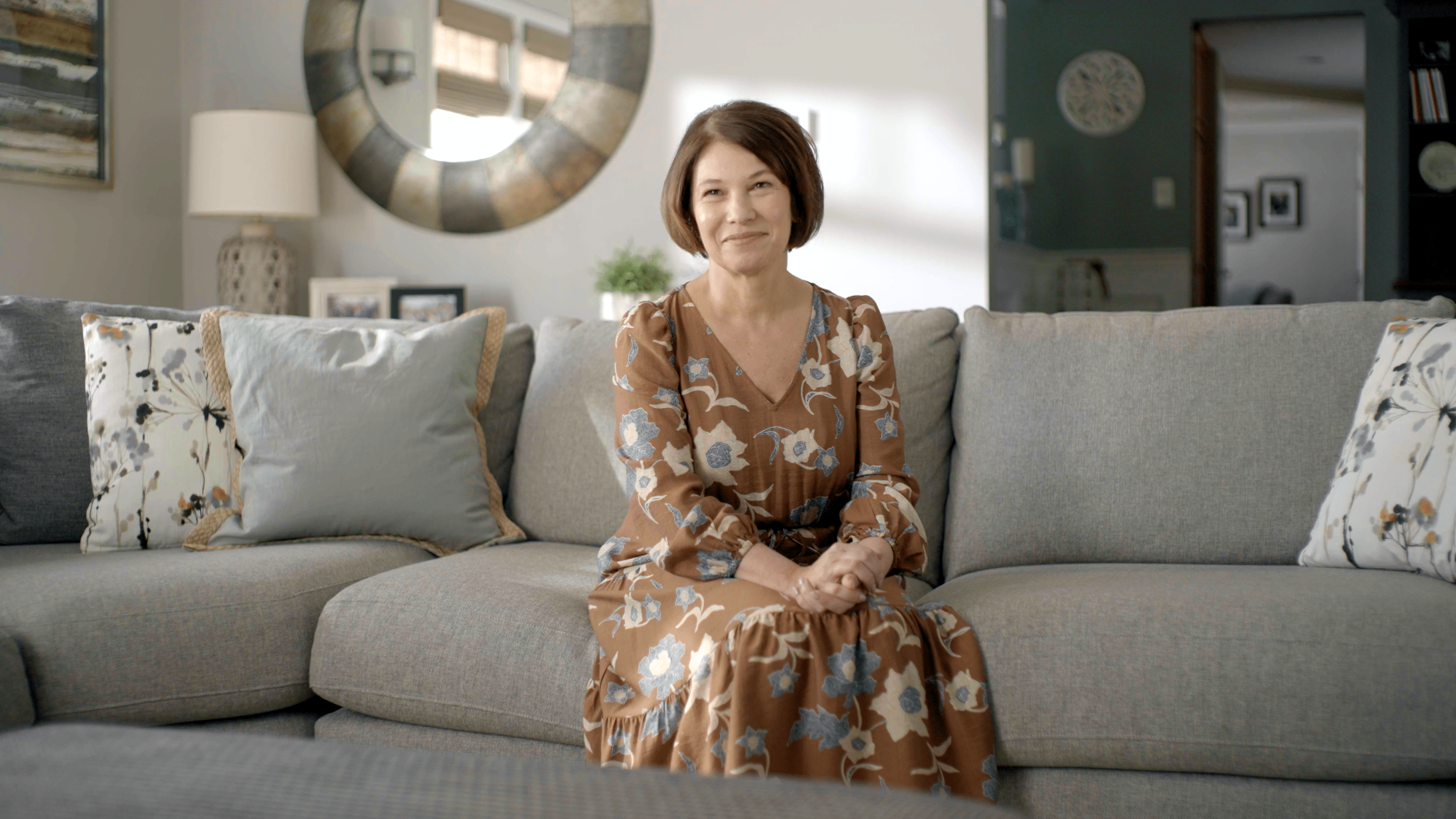
Christine, a post-menopausal osteoporosis patient.
The Silent Threat Demanding Our Attention: Osteoporosis
Stories like Christine's are not uncommon: postmenopausal osteoporosis affects millions of women but remains under-diagnosed and under-treated.2,3 Women in the U.S. aged 55+ experience a fracture every 20 seconds, yet osteoporosis is still widely underestimated, and many don't get timely care.4,5 The bones weaken silently, often without symptoms, until a fracture occurs.6 Too often, when issues are detected, they are dismissed as “just part of aging” instead of an urgent call for action.6
About two million osteoporotic fractures occur annually in the U.S, and more than 400,000 result in hospitalization—exceeding those for heart attack, stroke or breast cancer.7,8,9 And after an osteoporotic fracture, patients are five times more likely to suffer another fracture within a year.10 Yet, 88% of women 50 and older remain untreated one year after experiencing a fracture.3
“Osteoporosis is still widely underestimated by the general public,” says Sarah Murphy, senior director of Own the Bone and strategic partnerships at the American Orthopaedic Association (AOA). “Too many women don't recognize their risk, don't get screened, and don't understand that fractures don't have to be inevitable.”
What's worse, osteoporotic fractures can profoundly alter lifestyles by causing chronic pain, mobility loss, and reduced independence.11 “Vertebral compression fractures, the most common fragility fracture that occurs in older adults, can cause patients to lose height and lean forward, but it doesn't have to be this way,” says Rita Roy, MD, chief executive officer of the National Spine Health Foundation (NSHF).12 “We have tools to identify these fractures and multiple options for treating the underlying disease.”13
A Symbol Born from Our Mission: STAND BONE STRONG
Changing the narrative around postmenopausal osteoporosis requires a new kind of dialogue between patients and physicians—one that rallies them around the importance of diagnosis and treatment for osteoporosis; one that turns increased understanding into definitive action.
The Osteoporosis Action Network (OAN) brings together osteoporosis leaders to identify the real-world barriers that inhibit secondary prevention, proper diagnosis, and appropriate treatment with the goal of improving post-fracture care and helping reduce the risk of more fractures.
During Osteoporosis Awareness and Prevention Month, OAN is proud to introduce a new awareness symbol and shared unifying narrative to give the disease urgently needed visibility, and to become a recognizable badge for osteoporosis used across all organizations in the U.S.
STAND BONE STRONG is more than an emblem. It is a call to action, reflecting OAN's commitment to empowering individuals with knowledge, while encouraging early detection, and elevating bone strength as a lifelong priority.
“Inspired by the vision of a world where osteoporosis fractures are rare, this symbol captures the essence of what we stand for: that strong bones support strong lives,” shares Claire Gil, CEO, Bone Health & Osteoporosis Foundation.
How to STAND BONE STRONG for Stronger Futures
OAN is calling on partners, healthcare providers, and supporters to use the STAND BONE STRONG symbol to help shift public perception of postmenopausal osteoporosis and drive systemic change.
Together, we can inspire people to take charge of their bone strength long before problems arise and make post-fracture care a turning point, not a missed opportunity.
Learn more about OAN's goal to prevent 3 million fractures by 2033.
Initial support for Osteoporosis Action Network provided by Amgen.
References
- National Institute on Aging. Osteoporosis. National Institutes of Health. Updated November 2022. https://www.nia.nih.gov/health/osteoporosis/osteoporosis. Accessed April 16, 2026.
- Bone Health & Osteoporosis Foundation. What Women Need to Know. Bone Health & Osteoporosis Foundation website. https://www.bonehealthandosteoporosis.org/preventing-fractures/general-facts/what-women-need-to-know/. Accessed April 16, 2026.
- Data on File, Amgen; 2024.
- McClung MR, et al. Management of osteoporosis in postmenopausal women: The 2021 position statement of the North American Menopause Society. Menopause. 2021;28(9):973-997
- Camacho PM, Petak SM, Binkley N, et al. AMERICAN ASSOCIATION OF CLINICAL ENDOCRINOLOGISTS/AMERICAN COLLEGE OF ENDOCRINOLOGY CLINICAL PRACTICE GUIDELINES FOR THE DIAGNOSIS AND TREATMENT OF POSTMENOPAUSAL OSTEOPOROSIS-2020 UPDATE. Endocr Pract. 2020;26(Suppl 1):1-46. doi:10.4158/GL-2020-0524SUPPL
- National Institute of Arthritis and Musculoskeletal and Skin Diseases. Osteoporosis. National Institutes of Health. Updated December 2022. https://www.niams.nih.gov/health-topics/osteoporosis. Accessed February 23, 2026.
- Dempster DW. Osteoporosis and the burden of osteoporosis-related fractures. Am J Manag Care. 2011;17 Suppl 6:S164-S169.
- Gold T, Williams SA, Weiss RJ, et al. Impact of fractures on quality of life in patients with osteoporosis: a US cross-sectional survey. J Drug Assess. 2019;8(1):175-183. Published 2019 Oct 9. doi:10.1080/21556660.2019.1677674
- Singer A, Exuzides A, Spangler L, et al. Burden of illness for osteoporotic fractures compared with other serious diseases among postmenopausal women in the United States. Mayo Clin Proc. 2015;90(1):53-62. doi:10.1016/j.mayocp.2014.09.011
- van Geel TA, van Helden S, Geusens PP, Winkens B, Dinant GJ. Clinical subsequent fractures cluster in time after first fractures. Ann Rheum Dis. 2009;68(1):99-102. doi:10.1136/ard.2008.092775
- Ong, J., Snee, I., Marcano, I., Tintle, S., Cheikh, M., & Giladi, A. M. (2025). Bone health, fragility fractures, and the hand surgeon. Journal of Hand Surgery Global Online, 7(3), 100709. https://doi.org/10.1016/j.jhsg.2025.02.002.
- Donnally, C. J., III, Margetis, K., & Varacallo, M. A. (2025). Vertebral compression fractures. In StatPearls. StatPearls Publishing. https://www.ncbi.nlm.nih.gov/books/NBK448171/.
- Chinese Orthopaedic Association. (2009). Diagnosis and treatment of osteoporotic fractures. Orthopaedic Surgery, 1(4), 251-257. https://doi.org/10.1111/j.1757-7861.2009.00047.x.


