
A Reality That’s Been Hard to See
GLP-1–based treatments can help many patients reach meaningful weight loss—but discontinuation suggests the lived patient experience may be complex.1,2


Staying on GLP-1 therapy is associated with greater weight loss.3,*
* Based on 95,334 patients with or without type 2 diabetes (T2DM) who filed a prescription for GLP-1–based treatment (tirzepatide, semaglutide, or liraglutide) between 2010 and 2023 for any indication. At 6 months, patients who discontinued treatment within 0-3 months had a -1.8% weight change, while those persistent for 12 months saw an -8.1% change. At 12 months, the weight change for those who discontinued treatment was -2.2%, compared with a -10.9% change for persistent patients. Discontinuation was defined as a gap of ≥60 days from the last GLP-1–based treatment supply day, allowing for GLP-1 drug-type switching (eg, semaglutide to tirzepatide). Patients who reinitiated therapy after discontinuation were censored. Data were obtained from Optum® Market Clarity™ database, which provides linked insurance claims and EHRs.3
Real-World GLP-1 Treatment Patterns Reveal Patients Discontinue More Often Than You May Think2
Results from a recent study of >125,000 adults living with overweight or obesity showed2,†:
More than 50% of patients discontinue
GLP-1 based injectables within a year2,†
On average:
65% without T2DM
discontinued within 1 year
On average:
47% With T2DM
discontinued within 1 year
Higher GLP-1 Discontinuation Rates in Patients Without Type 2 Diabetes (T2DM)2
Treatment Benefits Begin to Diminish Following Discontinuation1,4,5
Results from a recent EHR claims data study showed that:
58% of patients regained weight within 12 months of GLP-1 discontinuation6,‡
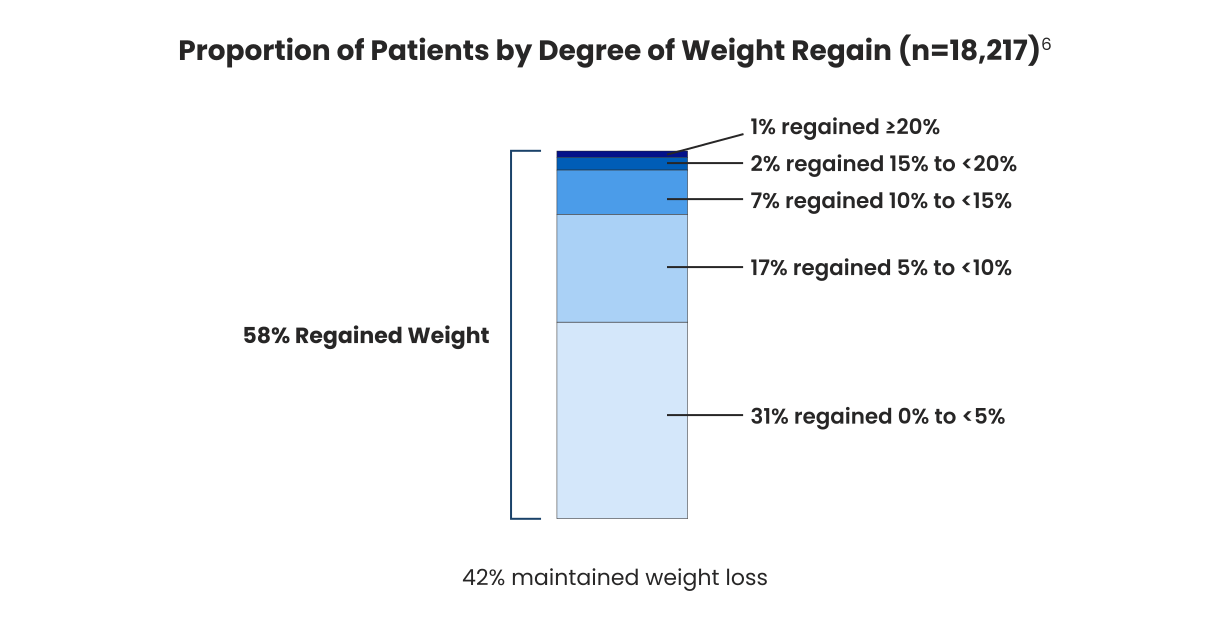
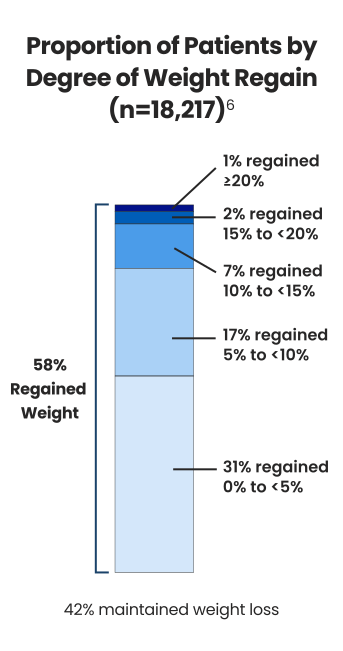

The likelihood of weight regain increases with greater weight loss6,§
§Among patients achieving an initial weight reduction of ≥20%, the mean weight regain was 17.2 lbs vs 11.0 lbs for patients who achieved initial weight reduction of 5% to <10%. This study included patients with and without a history of T2DM. Weight regain was 13.9 lbs in those with no history of T2DM vs 11.5 lbs in those with a history of T2DM.6
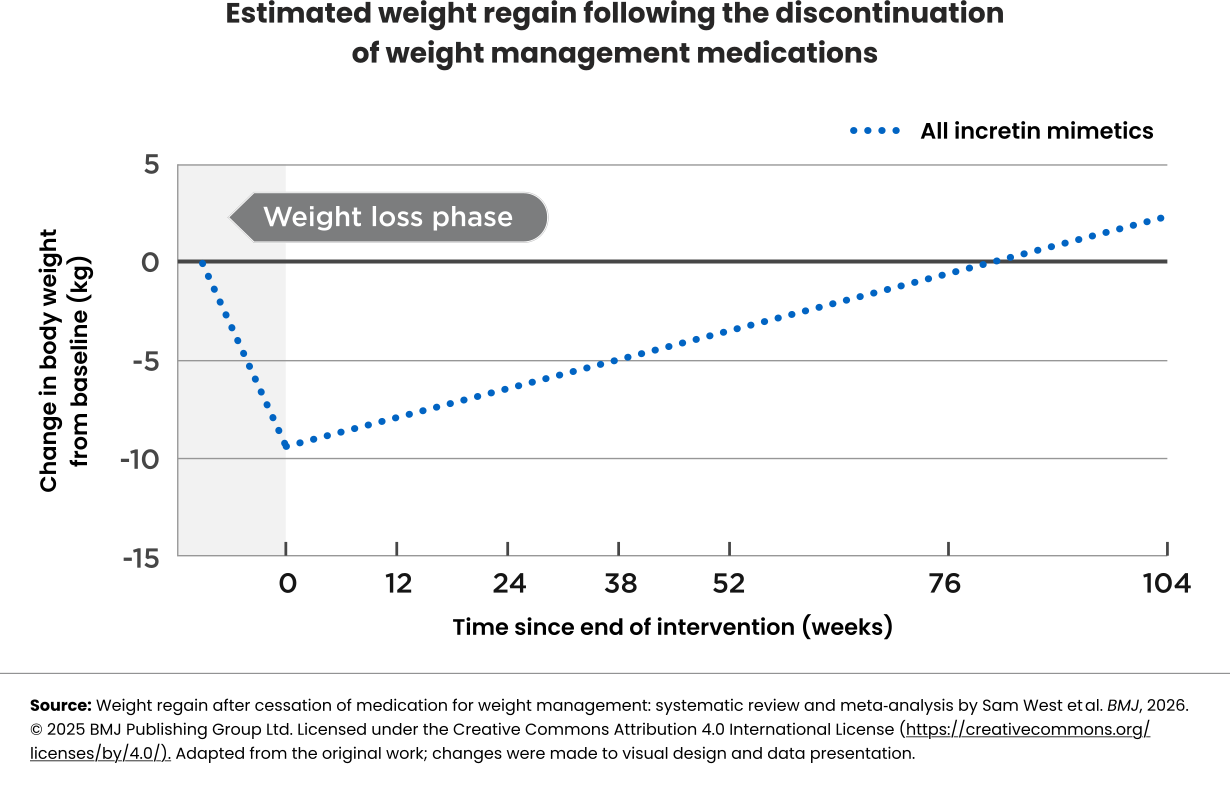
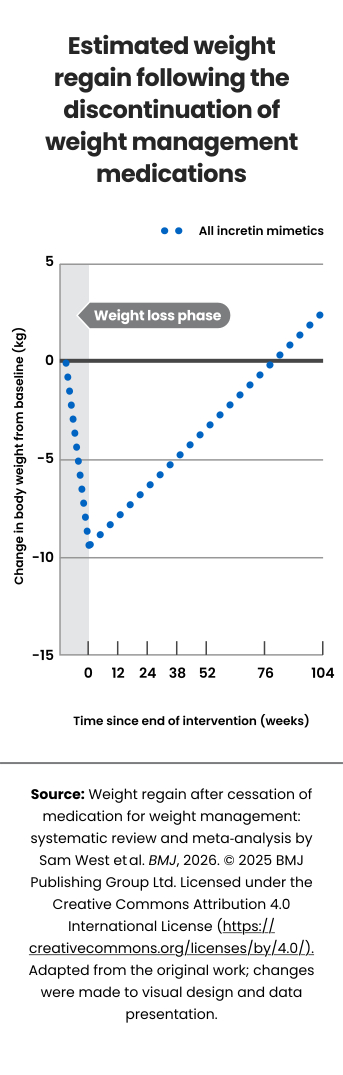
Results from a systematic review and meta-analysis study showed that following discontinuation of weight management medications:
Patients are estimated to return to baseline weight within 1.7 years1,**
Results from that same study also highlighted that following discontinuation of weight management medications:
Cardiometabolic benefits may be lost, with markers estimated to return to baseline within 1.4 years1,**
| Cardiometabolic Marker | Monthly Change Following Discontinuation | Time to Return to Baseline | |
|---|---|---|---|
| Glucose | HbA1c | ↑ 0.05 mmol/mol | ~1.4 years |
| Fasting glucose | ↑ 0.06 mmol/L | ~1 year | |
| Lipids | Total cholesterol | ↑ 0.05 mmol/mol | ~1 year |
| Triglycerides | ↑ 0.03 mmol/L | ~1 year | |
| Blood pressure | Systolic | ↑ 0.5 mm Hg | ~1 year |
| Diastolic | ↑ 0.2 mm Hg | ~1.4 year |


Ongoing obesity treatment is needed for maintaining weight loss and improvements in cardiometabolic markers4
Addressing Discontinuation Starts With Understanding What May Influence Adherence and Persistence5
Long-term adherence is shaped by multiple, interconnected factors—and ongoing research continues to explore how challenges may interact over time.5
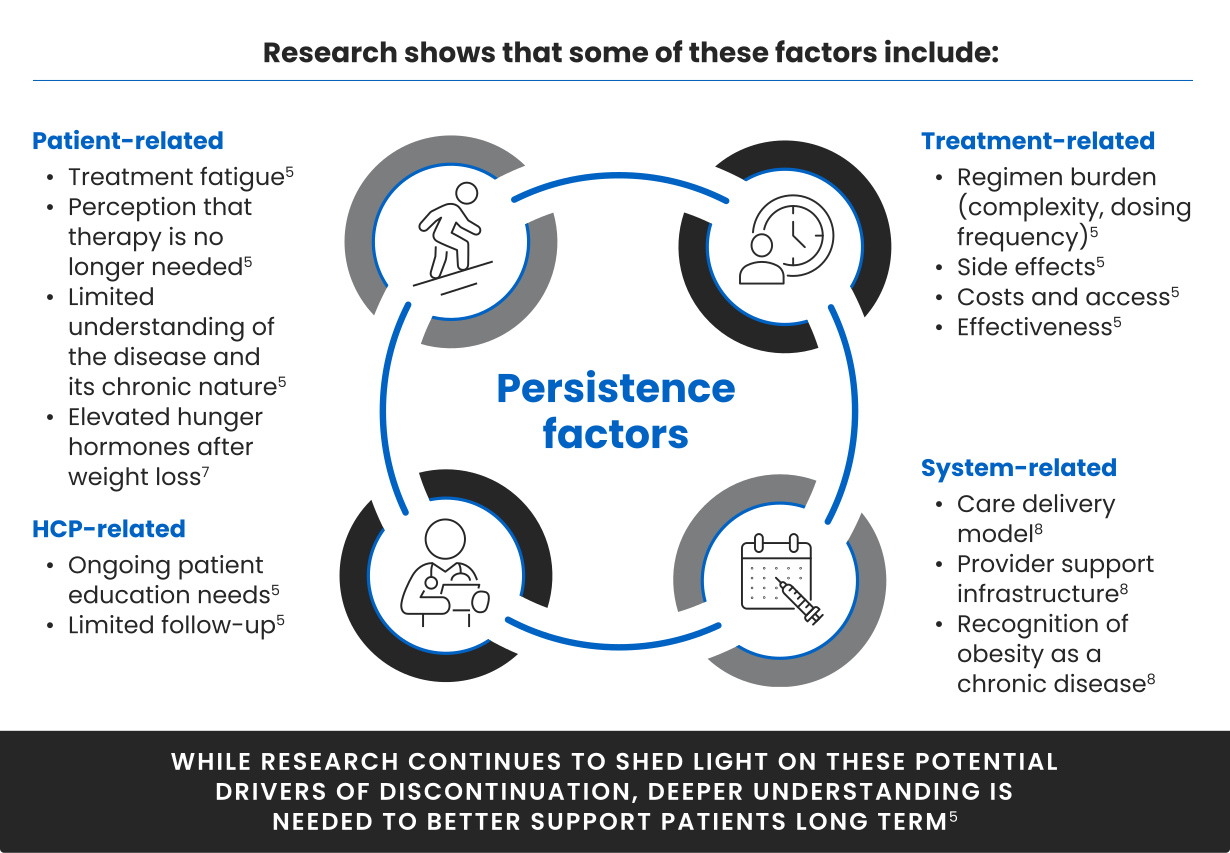
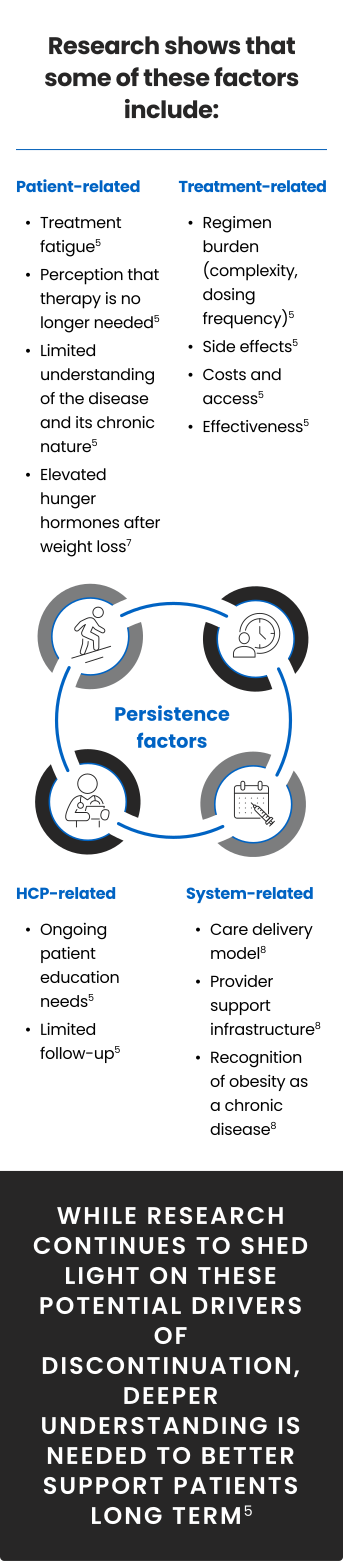

Prioritizing individualized treatment needs can help support patients’ long-term outcomes.5
Footnotes
BMI=body mass index; EHR=electronic health record; GLP-1=glucagon-like peptide-1; HCP=healthcare professional; T2DM=type 2 diabetes mellitus; US=United States.
† Based on 125,474 adults with overweight or obesity who newly initiated GLP-1–based injectables between January 1, 2018 and December 31, 2023. Data were obtained from Truveta Data, which provides EHR data across 30 US healthcare systems. Primary discontinuation was defined as the first date a patient went 60 days or more without any GLP-1–based treatment on hand, using fill dates and number of days of medication supplied to account for excess (carryover) medication from previous fills. Fills of all GLP-1–based injectables were considered; GLP-1–based injectables dispensed on subsequent fills were not required to match the index GLP-1–based injectables brand.2
‡ A retrospective cohort study of 18,228 US adults with or without T2DM and GLP-1 prescriptions for any indication from 2010 to 2024. 95.3% of the study population had a BMI ≥27 kg/m2. Data were obtained from the Optum® Market Clarity™ database, which provides EHR and claims data.6
** Systematic review and meta-analysis of 37 studies of anti-obesity medications administered for at least 8 weeks and follow-up of at least 4 weeks after treatment cessation in adults with overweight or obesity. Studies were identified through search of trial registries and databases (Medline, Embase, PsycINFO, CINAHL, Cochrane, Web of Science) from inception through February 2025 for randomized controlled trials, nonrandomized comparative trials, and observational studies. Estimates of cardiometabolic marker changes after treatment cessation are based on modeled projections of observed trends, with limited long-term follow-up. It was estimated that patients return to baseline weight within 1.7 years for any weight-management medication, 1.6 years for incretin mimetics, and 1.5 years for semaglutide and tirzepatide.1
Optum® and Market Clarity™ are trademarks of Optum, Inc.
References
- West S, Scragg J, Aveyard P, et al. Weight regain after cessation of medication for weight management: systematic review and meta-analysis. BMJ. 2026;392:e085304.
- Rodriguez PJ, Zhang V, Gratzl S, et al. Discontinuation and reinitiation of dual-labeled GLP-1 receptor agonists among US adults with overweight or obesity. JAMA Netw Open. 2025;8(1):e2457349.
- Girgis MS, Weintraub MA, Almanand JP, Chang ET, Malik RE, Dluzniewski P. Real-world weight change at 6 and 12 months after glucagon-like peptide-1-based treatment (GLP-1) initiation by duration of use and drug type. Presented at: The 23rd World Congress on Insulin Resistance, Diabetes & Cardiovascular Disease; December 3-6, 2025; Universal City, CA. Abstract 277.
- Kushner RF, Shapiro M. Obesity: assessment and treatment across the care continuum. Ann Med. 2025;57(1):2521433.
- Sharma AM, Birney S, Crotty M, et al. Determinants of adherence to obesity medication: a narrative review. Obes Rev. 2025;26(5):e13885.
- Weintraub M. Weight change after GLP-1 discontinuation in US patients living with overweight/obesity or diabetes. Poster presented at: ObesityWeek 2025; November 4-7; Atlanta, GA.
- Tacad DKM, Tovar AP, Richardson CE, et al. Satiety associated with calorie restriction and time-restricted feeding: peripheral hormones. Adv Nutr. 2022;13(3):792-820.
- Khani M, Afsahi R, Nasab AE, et al. Addressing the challenge of obesity in primary care: a review of effective interventions and implementation strategies. Diabetol Metab Syndr. 2025;17(1):351.